🤝 What Is a Session Zero?
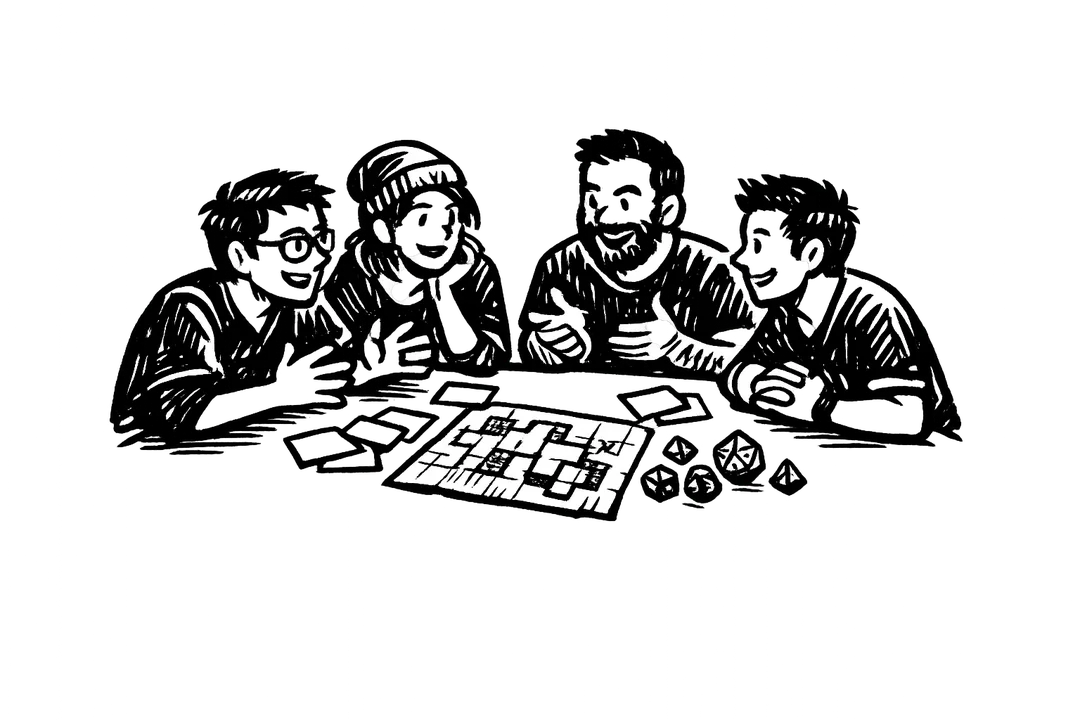
A Session Zero is the first time your group sits down together — not to play, but to agree on how you'll play. In ICRPG, this is especially important because the system works differently from what most players expect. ICRPG is fast, loot-driven, and built on trust between the GM and players. If everyone shows up expecting slow, tactical D&D, the speed of ICRPG can feel jarring. Session Zero prevents that.
Think of it like tuning instruments before a concert. The music doesn't start yet, but without this step, the band sounds terrible.
⚡ Setting ICRPG Expectations
The biggest adjustment for players coming from other systems is speed. ICRPG moves fast by design. Here are the key expectations to lay out:
🎲 One Target Number Per Room
The GM sets a single Target for the entire scene. Everything — attacks, skill checks, saves — is d20 + a stat against that one number, nudged only by EASY (−3) or HARD (+3). This isn't lazy design; it's intentional. It keeps the game flowing instead of stopping every action to calculate difficulty.
🎒 Loot Is Your Progression
There are no traditional levels. No XP. Your character grows mainly by finding, earning, and equipping loot, plus milestone rewards the GM hands out. A magic sword isn't just flavor — it's your power spike. Losing gear hurts. Finding gear feels incredible. Make sure players understand that the GM controls pacing through what loot appears, not through an XP curve.
⏱️ Timers Create Urgency
ICRPG uses physical dice on the table as countdown timers. When the d4 countdown runs out, reinforcements arrive. When the d6 runs out, the ritual completes. Players need to know that stalling is not a strategy. The world moves whether they act or not.
🔄 Turns Around the Table, No Initiative
Turns simply go around the table in order. No rolling for initiative, no sorting order. This means everyone gets a turn at roughly the same pace, and nobody waits 20 minutes for their slot. Let players know this keeps things fair and fast.
📇 Index Card Mentality
Everything in ICRPG fits on an index card. A room. A monster. A character. This constraint is a feature — it forces everyone to focus on what matters and skip what doesn't. Encourage players to think the same way about their characters: a few strong traits beat a 10-page backstory.
🧭 Topics to Cover
🌍 Setting and Tone
What kind of world are you playing in? High fantasy, sci-fi, horror, western, post-apocalyptic? ICRPG supports all of them. More importantly, agree on the tone. Is this a gritty survival game where resources matter? A lighthearted romp? A horror crawl? Tone shapes how the GM designs rooms and how players approach problems.
⚠️ Lines and Veils
Decide what content is off the table (lines — never happens) and what can happen but gets glossed over (veils — fade to black). This isn't about being restrictive; it's about everyone feeling safe enough to take creative risks. A quick conversation now prevents an awkward moment later.
📅 Schedule and Commitment
How often will you play? How long are sessions? What happens when someone can't make it — does the game continue, or do you reschedule? Setting this up front avoids the slow death of a campaign that "just kind of stopped." ICRPG's fast session prep makes it easier to run even on short notice.
📱 Table Rules
Phones at the table? Snack responsibilities? Who brings dice? These feel minor, but they shape the vibe of every session. Decide as a group. ICRPG sessions are short and punchy enough that "phones away for 2 hours" is a reasonable ask.
🎭 Character Creation Together
Session Zero is the best time to build characters as a group. ICRPG character creation is fast — 10 to 15 minutes — so there's no reason not to do it at the table. Building together has real advantages:
🤝 Party Balance
Not in the "you need a healer" sense — ICRPG isn't that rigid. But if everyone builds a sword-swinging warrior, the party has no magic and no stealth. Creating characters together lets the group naturally diversify.
🔗 Shared History
Ask each player how their character knows at least one other character. This creates instant party cohesion without forcing a "you all meet in a tavern" opening. Maybe two characters served in the same military unit. Maybe one owes the other a debt.
🎯 Aligned Goals
ICRPG works best when the party has a shared reason to adventure together. During character creation, help players find a common thread — revenge, exploration, survival, profit, duty. A party with aligned goals makes the GM's job dramatically easier.
🛠️ GM Prep for Session Zero
As the GM, come to Session Zero with a few things ready:
📋 The Pitch
One or two sentences that capture your campaign. "You're scavengers in the ruins of a fallen sky-city, competing with rival crews for ancient tech." That's enough. Let the players' questions fill in the rest.
🌍 Three Truths
Tell players three things that are true about the world. "Magic is dying. The empire just collapsed. Monsters are migrating south." These anchor the setting without requiring a lore dump.
🎲 A Quick Demo Encounter
If time allows, run a short encounter — 3 to 4 rounds of combat against simple enemies. This lets players feel ICRPG's speed, understand the Target system, and see how effort and timers work before the campaign starts. It's worth 20 minutes.
📝 Session Zero Checklist

- Tone and setting — what kind of game is this?
- Lines and veils — what's off limits?
- Schedule — when, how often, how long?
- Table rules — phones, snacks, attendance
- ICRPG expectations — speed, loot, timers, no initiative
- Character creation — build together, shared history
- The pitch — GM's 1-2 sentence campaign hook
- Three truths — what everyone knows about the world
- Demo encounter — optional but recommended
- Questions — leave time for players to ask anything
🏆 Key Takeaways
- 🎬 Session Zero saves sessions 1 through 20 — invest the time up front
- ⚡ ICRPG is fast — make sure everyone expects speed, not simulation
- 🎒 Loot drives everything — no levels, no XP, just gear and milestones
- 🎭 Build characters together — shared history creates instant party cohesion
- 📋 Keep it short — Session Zero should be 60 to 90 minutes, tops