🧠 The Conversion Mindset
Converting content to ICRPG isn't about translating every number. It's about capturing the feel of an encounter and expressing it through ICRPG's simpler framework. A D&D 5e stat block might have 15 fields; an ICRPG monster card has 5 or 6. That's the point — you're distilling, not duplicating.
The golden rule: if it doesn't fit on an index card, simplify it until it does.

👹 Converting Monsters
HP to Hearts
ICRPG uses Hearts instead of large HP pools. One Heart equals 10 HP of effort that players need to deal. There's no official conversion formula; this guide's rule of thumb is to go by the threat level the monster represents, not by its source HP:
- Minion (CR 0–¼ / Goblin, Skeleton) → ½ Heart (5 HP). Dies in one or two hits. Send them in groups.
- Standard (CR ½–2 / Orc, Zombie Ogre) → 1 to 2 Hearts. A fair one-on-one fight for a single player.
- Elite (CR 3–6 / Owlbear, Troll) → 3 to 4 Hearts. Requires teamwork. Give it a special ability.
- Boss (CR 7+ / Dragon, Beholder) → 5 or more Hearts. Multiple actions per round, phases, environmental effects.
Don't overthink this. A monster that feels dangerous should have more Hearts. A monster that's supposed to die fast gets fewer. Trust your instincts over the math.
Armor Class to Target
In the source system, each monster has its own AC. In ICRPG, you set one Target for the whole room (often around 10–14). Use the most prominent threat as a rough guide when picking it — again, a rule of thumb rather than an official table:
- AC 10–12 → Target 10–11
- AC 13–15 → Target 12
- AC 16–18 → Target 13–14
- AC 19+ → keep the room Target and make attacks against that foe HARD (+3)
If there's a mix of weak and strong enemies, set the Target based on the strongest one. Minions being harder to hit than expected actually makes them more interesting — they feel scrappy instead of disposable.
Attacks and Abilities
Strip a monster's stat block down to what makes it memorable. Most D&D monsters have 3 to 6 actions — keep 2 to 3 at most for ICRPG:
- Primary attack: its main damage source, translated to an Effort die. A greatsword becomes "d6 Weapon Effort." A fire breath becomes "Magic Effort (d10) to everyone CLOSE."
- Signature ability: the one thing that makes this monster different. A troll regenerates. A beholder has eye rays. A medusa petrifies. Keep one signature move and make it impactful.
- Timer/Trigger: add an escalation. "At half HP, it enrages (+2 damage)." "Every d4 rounds, it calls reinforcements." This replaces complex legendary actions with something simpler and more dramatic.
Example: Converting a D&D Troll
D&D 5e: AC 15, 84 HP, multiattack (bite + 2 claws), regeneration 10 HP/round, vulnerable to fire/acid.
ICRPG Card:
- Target: Room Target 12 (AC 15 falls in the 13–15 band above; raise it if the troll is the big fight)
- HP: 2 Hearts (below the usual 3–4 for an Elite, because regeneration keeps it standing much longer than its Hearts suggest)
- Claw/Bite: d6 Weapon Effort
- Regeneration: Heals d4 HP each round unless hit by fire or acid
- Timer: d4 rounds — a second troll arrives
That's the whole card. Five lines. Runs faster, hits just as hard at the table.

🗺️ Converting Encounters
The Room Conversion Formula
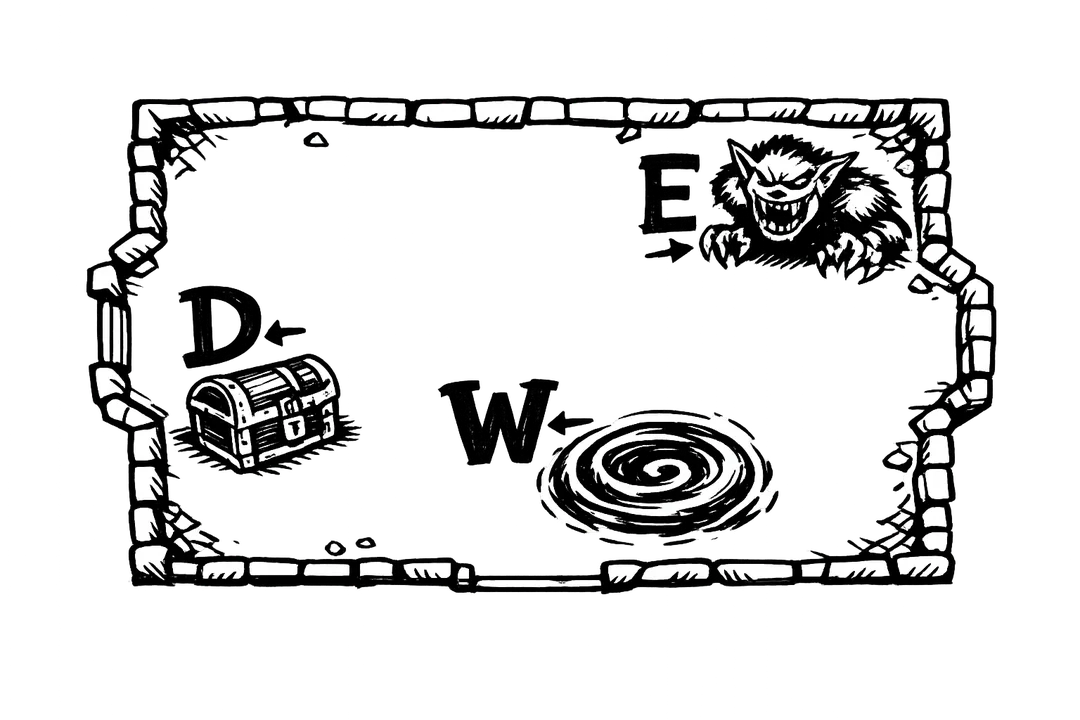
A D&D encounter might have a detailed map, precise enemy placement, environmental rules, and multiple terrain types. For ICRPG, compress it into this guide's D.E.W. room checklist (Danger, Energy, Wonder, the encounter framework from Room Design):
- D — Danger: What can hurt the players here? A trap, a hazard, a foe. Keep the source encounter's real threats and drop the filler.
- E — Energy: What keeps the scene moving? Enemies who act, a timer ticking down, a floor giving way. Convert foes using the monster guidelines above: fewer enemies with more presence beat a swarm of stat blocks.
- W — Wonder: What's amazing or unexpected? Pull the most evocative detail from the source encounter and make it the centerpiece, or add one: a gravity anomaly, a talking door, a floor that's slowly turning to glass.
Encounter Difficulty
D&D uses Challenge Rating and encounter budgets. ICRPG play favours a simpler gut check (this guide's suggestion, not an official table):
- Easy encounter: Target 10–11, enemies with ½ to 1 Heart each, no timer
- Medium encounter: Target 12, enemies with 1 Heart, d6 timer for escalation
- Hard encounter: Target 13–14, 1 elite enemy or several standards, d4 timer
- Deadly encounter: Target 15 or more, boss with 5+ Hearts, multiple timers, environmental hazards
🎒 Converting Loot and Magic Items
The +1/+2/+3 Translation
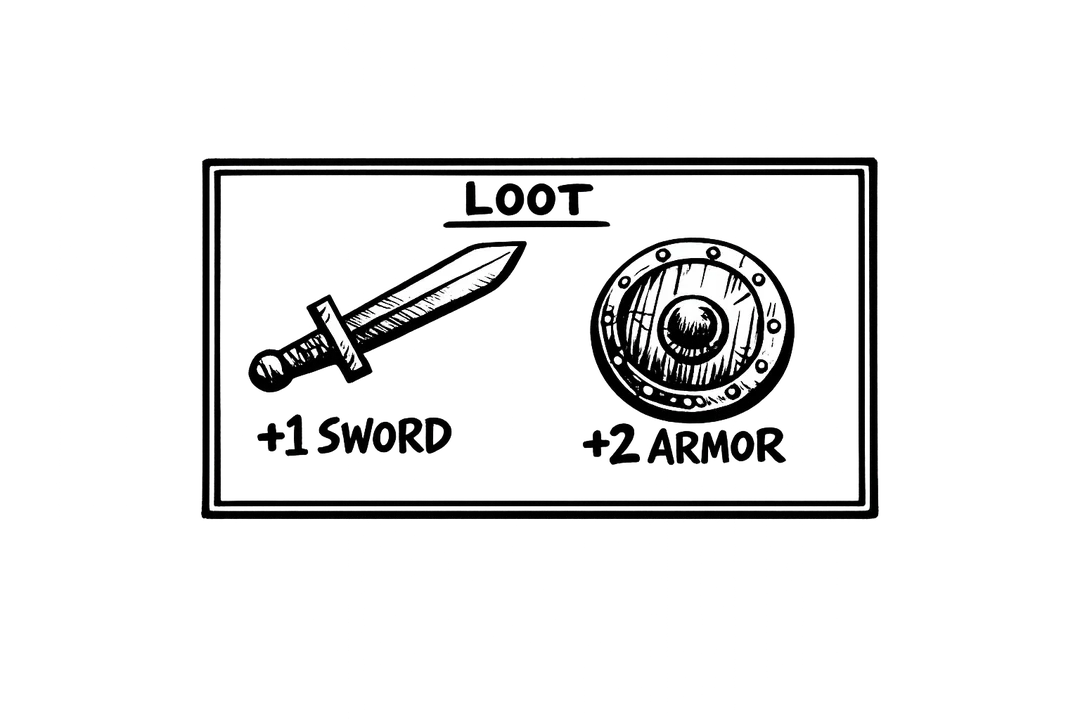
In D&D, a +1 longsword adds +1 to attack and damage rolls. In ICRPG, bonuses work differently — they stack onto Effort or stats directly:
- +1 Weapon (D&D) → "+1 Weapon Effort" (ICRPG). Simple and direct.
- +2 Weapon (D&D) → "+2 Weapon Effort" or "+1 Weapon Effort, +1 to STR attempts." Spread the bonus across two effects for more flavor.
- +3 Weapon (D&D) → "+3 Weapon Effort" plus a unique ability. At this power level, every weapon should feel special.
Spell-Like Items
Items that cast spells in D&D become simpler in ICRPG. Instead of tracking spell slots and recharge conditions, use these patterns:
- "X charges per day" → "1/encounter" or "1/day" depending on power level
- "Requires attunement" → it has to take up one of your limited equipped slots (which serves the same gating purpose)
- Scrolls and potions → single-use consumables, describe the effect in one line
Armor Conversion
D&D armor provides an AC number. In ICRPG, armor adds a bonus to your DEFENSE (10 + your bonuses), the number monsters must roll against to hit you — it makes you harder to hit rather than reducing damage. A rough mapping:
- Light armor (Leather, Padded) → +1 DEFENSE
- Medium armor (Chain shirt, Chain mail, Breastplate) → +2 DEFENSE (this guide’s sample heroes count chain mail as +2)
- Heavy armor (Plate, Splint) → +3 to +4 DEFENSE
- Shields → +1 DEFENSE (stacks with worn armor)
✨ Converting Spells and Abilities
Spell Conversion Principles
D&D has hundreds of spells with precise ranges, areas, durations, and components. ICRPG doesn't need any of that. Convert spells by asking two questions:
- What does this spell DO? — describe the effect in one sentence
- How strong is it? — assign an Effort die and a range (CLOSE/NEAR/FAR)
That's it. Fireball becomes "Magic Effort (d10) to everything CLOSE to a point at NEAR range." Healing Word becomes "Heal d4 HP, NEAR range, costs your action." Counterspell becomes "INT attempt vs Target to cancel a spell being cast at NEAR."
Class Features
D&D class features often have complex scaling, resource tracking, and conditional triggers. In ICRPG, convert them to loot-style bonuses or simple abilities:
- Sneak Attack → "+d6 Weapon Effort when attacking from stealth or while an ally is CLOSE to the target"
- Rage → "+2 STR attempts, +1 Weapon Effort, resist physical damage, lasts d4 rounds"
- Channel Divinity → "Heal all allies CLOSE with a Magic Effort roll (d10), 1/encounter"
- Wild Shape → "Transform into beast form: +2 CON, natural d6 weapon, lasts until you choose to end or hit 0 HP"
The pattern is: strip out the bookkeeping, keep the fantasy, and assign ICRPG-scale numbers.
📖 Converting Published Adventures
The Chapter-to-Session Pipeline
A published D&D adventure might have a chapter that spans 3 to 5 sessions. In ICRPG, compress each significant encounter into a single room card. A dungeon with 20 rooms becomes 6 to 8 meaningful rooms — the rest are transitions you can narrate through.
What to Keep
- The hook — why the players are here
- Key NPCs — convert to NPC cards (name, motivation, one ability)
- Boss encounters — these are the set pieces, give them full attention
- Memorable locations — the rooms players will talk about later
- Critical loot — items that drive the plot forward
What to Cut
- Random encounter tables — use timers instead to add pressure
- Empty rooms — if nothing happens there, skip it
- Lengthy NPC monologues — NPCs get one key line, players can ask questions
- Complex traps with multiple checks — one roll to detect, one roll to disarm
- Shopping sequences — give players a loot list and move on
🔧 System-Specific Notes
From D&D 5e
5e's bounded accuracy (most ACs and DCs between 10 and 20) maps fairly cleanly onto ICRPG's Target range, which tends to sit at the lower end of that band. The biggest adjustment is removing action economy — no bonus actions, reactions, or legendary actions. Replace complex multi-action turns with one action that feels impactful.
From Pathfinder 2e
PF2e's three-action economy is already closer to ICRPG's design philosophy. The main conversion work is removing the feat tax — PF2e characters are built from dozens of stacking feats. In ICRPG, pick the 3 to 4 most defining abilities and express them as loot or milestone rewards.
From OSR Systems
OSR games (Old-School Essentials, Knave, Cairn) are already close to ICRPG's philosophy. Low HP, dangerous combat, player skill over character skill. The main addition is the Effort system — OSR games often use binary pass/fail, while ICRPG's Effort adds a progress layer that makes tasks feel more dynamic.
🏆 Key Takeaways
- 🔄 Convert the feel, not the numbers — capture what makes the content memorable
- 📇 Index card test — if it doesn't fit on a card, simplify further
- 👹 Monsters need 2–3 traits max — primary attack, signature ability, timer
- 🎒 Loot translates directly — +1 becomes +1 Effort, spell items become 1/encounter
- ✂️ Cut aggressively — ICRPG runs on what matters, not what fills pages
🧰 Where to Go From Here
No group this week? The final part, Playing ICRPG Solo, shows how to be your own GM with a d20 oracle and D.E.W. room sparks. After that, the tools take over — use them at the table or while you prep:
- 📛 Character Names — instant names for heroes, villains and NPCs
- 🎲 Ready-Made Characters — grab one and start playing
- 🎲 Dice Roller — d20 attempts and every Effort die
- 🃏 Character & Monster Cards — your converted monsters, on cards
- 🎁 Loot Generator — rewards when the source adventure's treasure doesn't fit
- 📋 Quick Reference — the core rules on one page